“Why exact and perfect continuous visualization is difficult ?”
— Shilpa, Ahmedabad
Visualisation happens differently for different people. One person may imagine a flower and see its colour and shape quite clearly. Another may have a faint impression that comes and goes. Someone else may sense the flower’s presence, recall its fragrance, or simply know what they’re imagining.
Begin with how it happens for you. If you’re waiting for a perfectly clear picture before you allow yourself to continue, you may spend the whole practice checking whether you’re doing it correctly.
Why does the image keep disappearing?
Notice the expectation in the words “exact, perfect, continuous visualisation.” You’ve already decided how the experience should unfold.
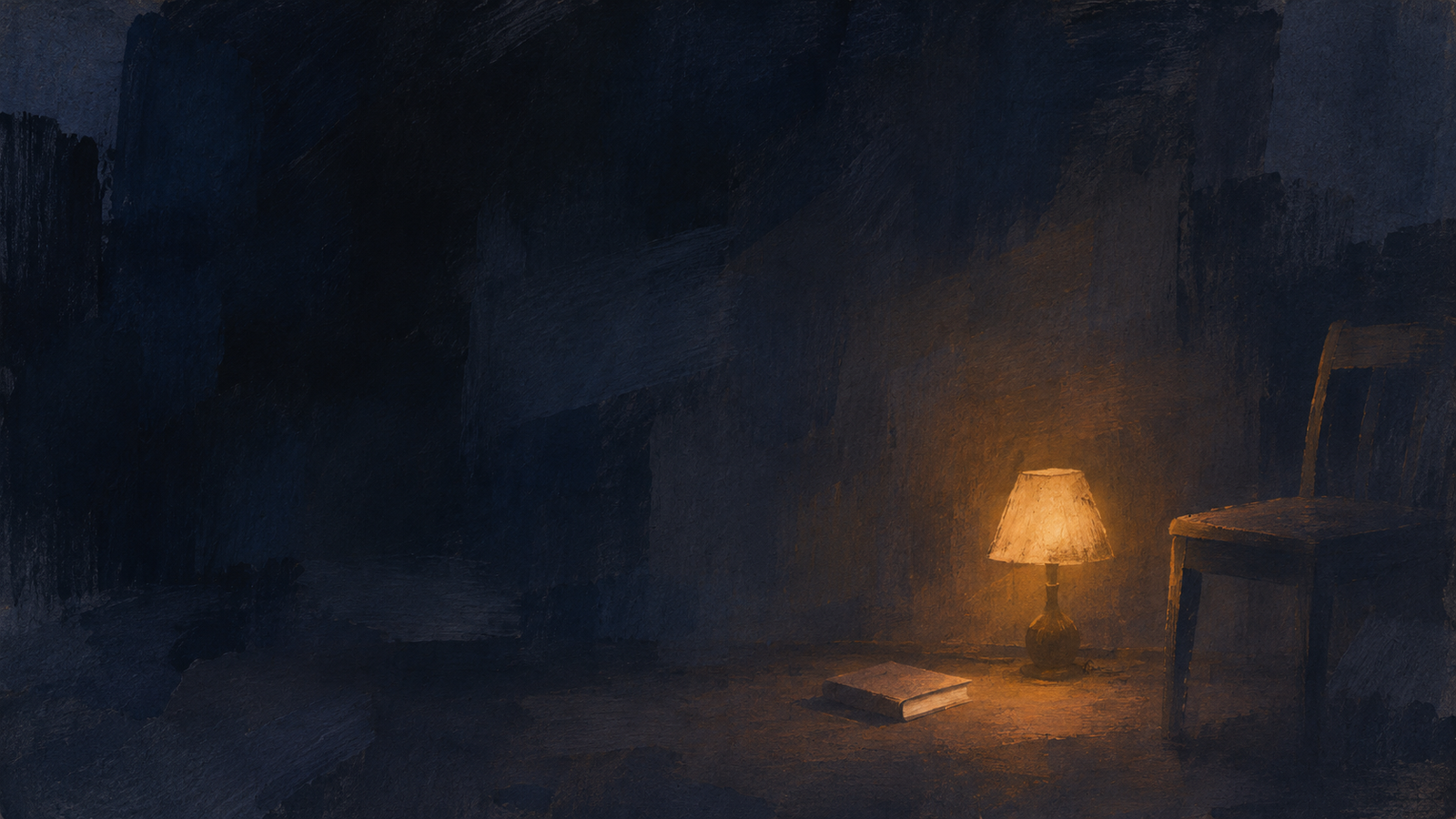
You imagine a lamp. For a moment, there’s a faint impression of light. Then you ask, “Is this clear enough? Am I really seeing it?” Your attention has moved to evaluating the image. A few moments later, you’re frustrated that it has disappeared.
When you notice that you’ve wandered, gently return to what you were imagining. You can begin again with one small detail. Give yourself room to explore without measuring every moment.
Bring back a little playfulness
As children, many of us could turn an ordinary room into an entire imaginary world. A bedsheet became a tent. A cardboard box became a house. We became involved in the experience with very little concern about how accurately we were imagining it.
As we grow older, we spend more time planning, analysing, and checking whether something makes sense. That habit can follow us into meditation. Even while imagining a peaceful place, we may find ourselves evaluating every detail.
Try approaching the practice with a little of that childhood curiosity. If you’re imagining a garden, explore what interests you. Perhaps it’s the warmth of the sunlight or the sound of leaves moving. Let yourself stay with that detail for a moment.
This sense of wonder is something you can give time to in daily life too. Look closely at a leaf, listen to a familiar piece of music, or notice the changing light in your room. Allow yourself a few moments to experience something before naming or explaining it.
Work with the experience available to you
If a guided practice asks you to imagine sitting beside a lake, a clear picture may come easily. You might also find it easier to imagine the sound of water, the coolness of the air, or the feeling of sitting quietly.
Where the practice allows, use whichever of these feels accessible. If you’re rehearsing a difficult conversation, you can imagine speaking slowly, feeling your feet on the ground, and listening before you reply. The other person’s face may remain indistinct while the situation still feels meaningful to you.
People naturally differ in how vividly they experience mental images. Some have little or no voluntary visual imagery, sometimes called aphantasia. Being highly logical, educated, or grown up doesn’t by itself explain that difference.
Give yourself permission to discover how your imagination works.
Start with something simple
Try this for a minute or two.
- Look at an ordinary object, such as a cup or a flower. Notice its colour, shape, and one small detail.
- Close your eyes gently and invite an impression of it.
- Notice what comes. It might be a picture, an outline, a word, or a sense of the object.
- If the impression fades, open your eyes, look again, and repeat without rushing.
Treat this as an exploration. You may find that familiarity makes the exercise easier, while the vividness of the image continues to vary.
When you return to your guided meditation, follow the instructions with the same gentleness. If a particular technique depends on imagery that remains inaccessible, ask your teacher how to adapt it.
You can bring sincerity to the practice and still let it feel light. Allow the image to appear, fade, and return. Stay curious about what you actually experience.
~ Shashank
MindSchool members join every live workshop, 100+ guided meditations and the community — ₹399/month, cancel anytime.